
The Bridges Are Already Built
Reflections on Connection, Coalition, and Community from the SHARE Charlotte Community Impact Summit
by Brandi Cagle
Last week, SVP gathered alongside nonprofit leaders, community partners, creatives, and changemakers from across Charlotte for the 2026 SHARE Charlotte Community Impact Summit. Throughout the day, conversations moved across topics ranging from civic engagement and food insecurity to creativity, collaboration, and community leadership. Yet despite the variety of speakers and sessions, many of the conversations seemed to return to the same underlying question: in a rapidly growing city, how do we remain connected to one another?
Charlotte continues to grow at an extraordinary pace. During the summit, Tracy Russ noted that the region has now surpassed three million residents, with more than 54,000 newcomers arriving over the past year alone. At the same time, civic participation and social connection continue to decline nationally, while loneliness has reached historic levels. That tension between growth and connection created an important backdrop for many of the day’s conversations.
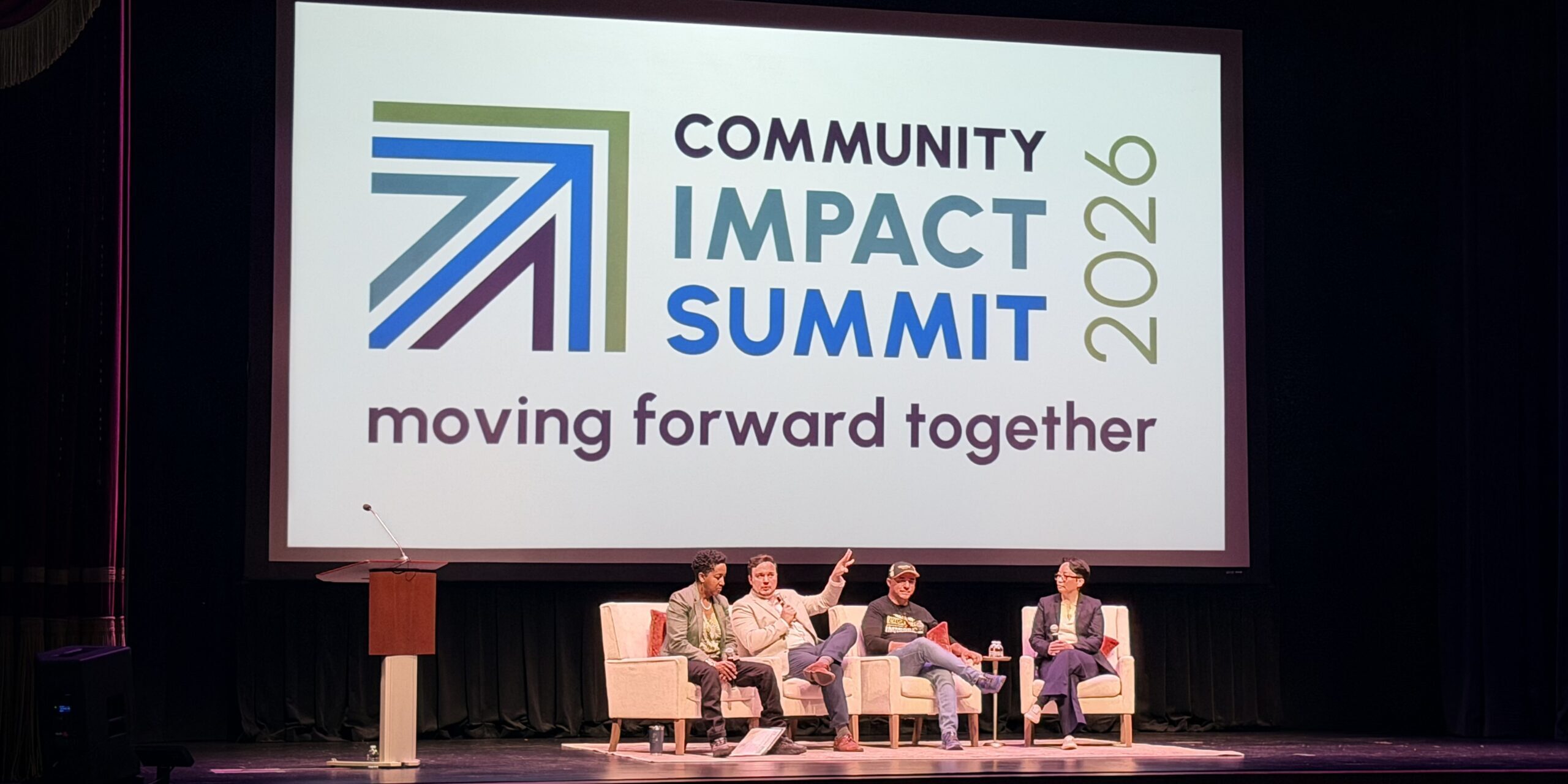
One panel that especially embodied those themes featured several of Charlotte’s eastside leaders, moderated by journalist Tonya Jameson, including Ann Gonzales of the Carolinas Asian-American Chamber of Commerce, Greg Ascuitto of CharlotteEAST, and Manolo Betancur of Manolo’s Bakery. Their conversation centered around cultural connection, coalition-building, and what it truly takes to build trust within communities.
At one point, Greg spoke about the importance of simply knowing your neighbor. Starting small. Neighbors helping neighbors. Tonya emphasized that consistency in community work is what builds trust over time. Manolo reflected on the importance of shifting from “I” to “We,” acknowledging that collective thinking does not always come naturally within American culture, where individualism often takes center stage.
When asked what still prevents stronger collaboration and partnership-building, Manolo’s response drew a visible reaction from the room. He named four barriers: love, identity strongholds, fear, and jealousy. Honest answers like that seemed to create space for more honest conversations throughout the day.
Another powerful moment from the panel centered around last fall’s ICE raids across Charlotte, which heavily impacted East Charlotte’s Hispanic community. As an East Charlotte resident myself, I remember the daily visuals and tension surrounding those moments vividly. Manolo’s Bakery became a gathering place for support, advocacy, and solidarity during that time, but as the panelists shared, the response stretched far beyond one neighborhood. People from across Charlotte showed up. The phrase used to describe that collective response was a “huge army of angels.”
What struck me most was that the conversation never framed community support as charity or performance. It was about showing up for one another and resisting the fear of “intruding” into communities different from our own. One of the most powerful lines shared during the summit came from Manolo himself: “We have so many bridges built. It isn’t that. We need people to take the risk and cross those bridges.”
That sentiment carried naturally into the launch of fftc:FWD, a new civic empowerment and engagement initiative from Foundation For The Carolinas’ Robinson Center for Civic Leadership. The initiative is designed to help people better understand community issues, discover who is already doing meaningful work across Charlotte, and more easily connect with opportunities for engagement and action.
One phrase shared during the presentation captured that spirit well: “We need more of us to move us.”
Rather than positioning civic engagement as something reserved for institutions or experts, the initiative emphasized collective participation and shared responsibility. In a city growing as quickly and dynamically as Charlotte, that framing felt especially timely.
One of the most thoughtful aspects of fftc:FWD was its intentional integration of local artists into the initiative’s issue-based storytelling. Artists were commissioned to visually interpret topics ranging from housing and economic mobility to sustainability, healthcare, education, transportation, and AI. The artwork gives those issue areas emotional texture instead of presenting them as sterile categories. In a space so often driven by metrics, systems, and terminology, it felt meaningful to see creativity positioned as part of the civic conversation itself.
That same intersection between systems and lived experience surfaced again during a discussion on food insecurity led by Tina Postel, CEO of Nourish Up. Her remarks challenged the false belief that food insecurity exists only within houseless populations. In reality, many working families quietly experience food insecurity every day while balancing rising costs of housing, healthcare, transportation, and childcare.
She emphasized that it is not simply an availability issue, but an issue of access and distribution. More importantly, she reminded the audience that food, healthcare, education, and housing are all interconnected. None of these challenges exist in isolation.
One statement she shared truly felt aligned with the broader spirit of the summit: “The goal should be to put ourselves out of business.” It was a simple but powerful reminder that nonprofit work, at its core, is about building healthier and more sustainable communities over the long term.
What I appreciated most about the summit was its continual return to participation. Not perfection. Not expertise. Participation. Give. Volunteer. Advocate. Know your neighbor. Cross the bridges that already exist.
Even the creative moments woven throughout the day reflected that spirit. Through partnerships facilitated by Charlotte Is Creative, the summit opened with a performance by Phoenix Down RPG featuring Umoja (“unity”) by composer Valerie Coleman, symbolizing the interconnected ecosystem of nonprofits, foundations, donors, community organizations, and residents all existing within the same community ecosystem.
And the closing moment may have captured the spirit of the day best of all.
Led by my dear friend Zacch Estrada-Petersen, Founder and Director of the Brighter Day Community Choir, the audience was invited to gradually build rhythm and voice together through the song “Lean on Me.” After a full day of conversations about trust, loneliness, coalition-building, food insecurity, civic participation, and connection, it felt like a fitting close.
Not because everyone in the room shared the same perspectives or experiences, but because the summit continually reinforced a simple truth: stronger communities are built when people choose to show up for one another.